Heritage Sites in the Face of Climate Change

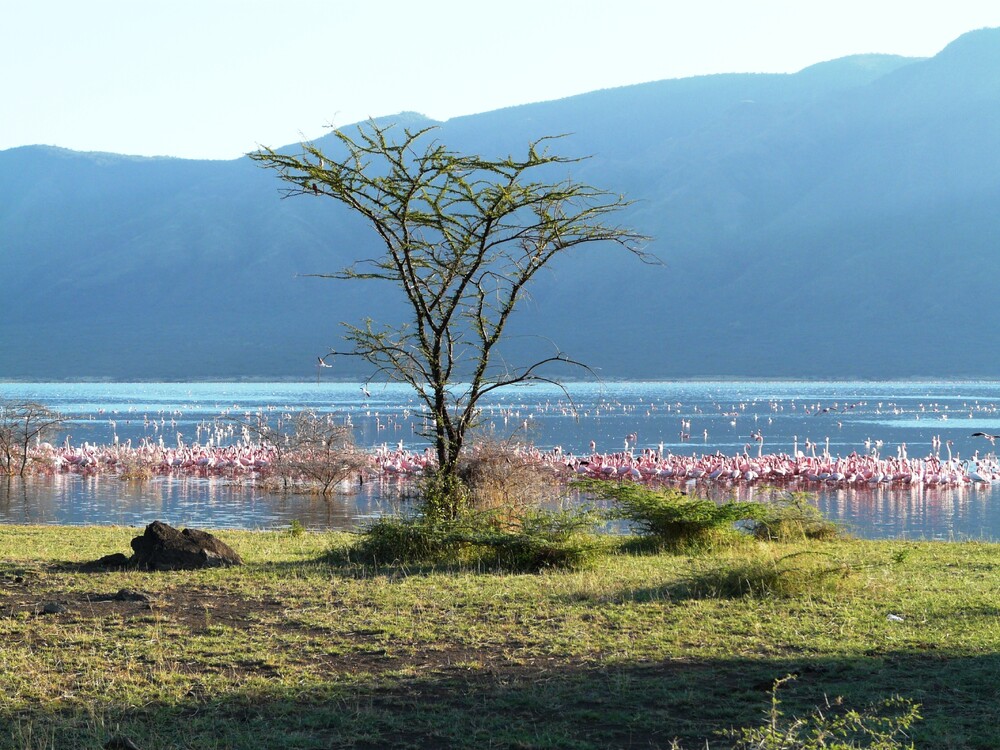
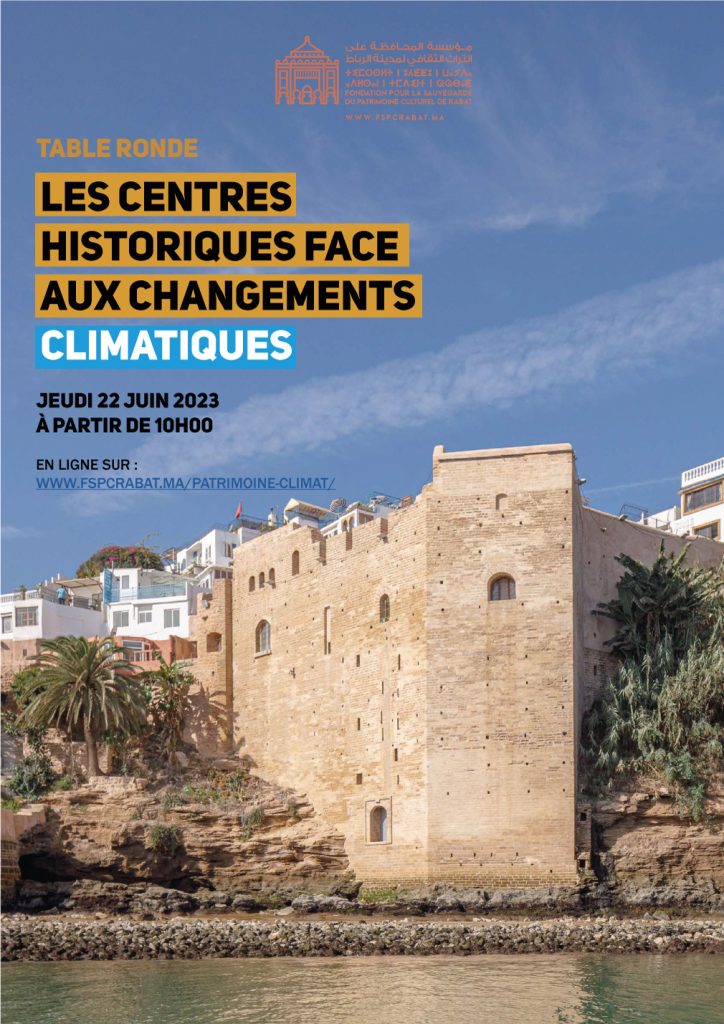
Climate change increasingly impacts cultural heritage, be that material, immaterial or scenic.  Heritage sites are often trapped by urban practices and expanding human activity, undermining their resilience and jeopardizing some of their attributes.

Heritage sites are prime illustrations of the osmosis between human action and nature, thereby enhancing local character in terms of layout, choice of materials, architectural perspectives, and orientation… Hence the importance of preserving and protecting these sites from the daily hazards of climate change.  This meeting of experts launches the debate on the impact of climate change on heritage sites and associated risks.

The meeting also seeks to initiate discussions on the need for concerted measures to safeguard moveable cultural heritage in urban centers, and areas most exposed to pollution and human activity.  Moveable heritage (whether monumental or domestic) presents both vulnerabilities and great potential in managing the impact of global warming in urban areas, whether through traditional construction techniques and methods (providing lessons in sustainability and respect for the environment) or through new cultural applications of built heritage.

The meeting highlights the value of cultural heritage in establishing historic sites, as well as the vulnerability of these sites in the face of new climatic challenges, and the associated potential hazards to their conservation.  The meeting also examines case studies of cultural heritage sites facing the threat of climate change, with specific recommendations on how to address this situation, as well as new guidelines and recommendations for strengthening the resilience of urban heritage, risk mitigation, and heritage asset management methods.

Experts will share insights and perspectives on the sustainable management of listed sites, highlighting the age-old ecological value inherent to building and conservation techniques, while considering the effects of climate change.  The meeting ties in with Foundation workshops aimed at sharing expertise, raising awareness, and building capacity, to strengthen and synergize efforts towards eco-responsible and environmentally-friendly heritage property management.

Videos

Suggestions

African Heritage Sites Facing Climate Change is a series of workshops and capacity-building sessions launched by the Foundation for the Safeguarding of Cultural Heritage in Rabat in partnership with UNESCO. This initiative is aimed at site managers, mentees, experts, representatives of civil society, institutional stakeholders, cultural heritage professionals, and young Africans. It seeks to address various aspects of climate change impacts on African heritage, in line with the Policy Document on climate action for World Heritage adopted in 2023 by the General Assembly of States Parties to the World Heritage Convention.

African heritage sites are increasingly exposed to the effects of natural hazards intensified by climate change. Coastal erosion, flooding, desertification, extreme temperatures, and other environmental threats are placing growing pressure on the conservation and management of these fragile places. These impacts not only endanger the material integrity of monuments and cultural landscapes, but also challenge the long-term sustainability of conservation practices. This workshop will explore how these natural threats manifest across different African contexts and how innovative, locally grounded solutions are emerging to address them. 

Download the Call for Presentations : https://whc.unesco.org/document/223618

For more information on the workshop series, topics or submission guidelines, please contact us at : wh-africa@unesco.org

Image copyright : © IUCN

28 November 2025

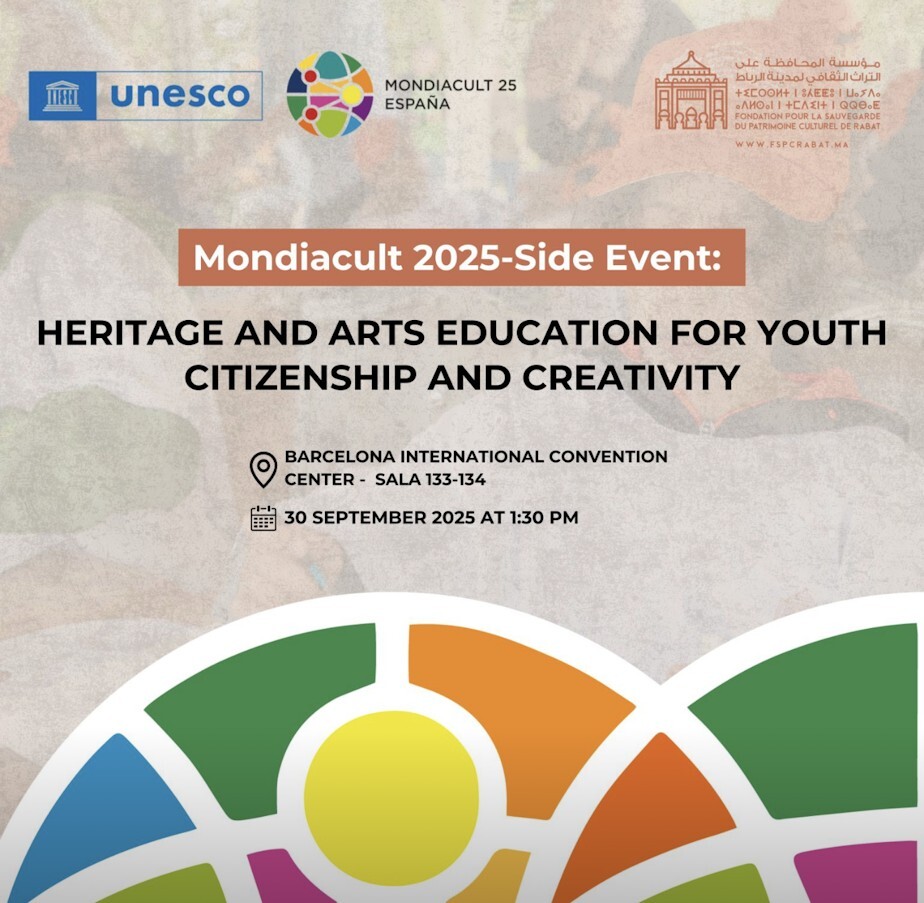
the Cultural Heritage of Rabat, in partnership with Fondation Hiba, organized a side-event focused on the role of heritage and arts education as drivers of creativity and citizenship among young people. The event explored how heritage education has gone beyond the mere transmission of knowledge to become a catalyst for civic engagement and artistic innovation, relying on integrated and sustainable approaches in line with the priorities of MONDIACULT 2025.

The event brought together professionals from the fields of education, culture, arts, and global citizenship to highlight innovative methodologies that combine heritage, artistic creation, global education, and sustainable development. The presentations demonstrated how these integrated approaches renewed young people’s interest in heritage while promoting civic participation, creativity, and intercultural understanding.

Participants also explored the connection between heritage and contemporary arts — including comics, street art, and storytelling — as levers for civic expression and social inclusion. The discussions helped identify inspiring practices that could be replicated in other contexts and contributed to the international debate on heritage education as a strategic tool for social cohesion, innovation, and sustainable development.

Several key questions guided the discussions: How can heritage become an educational tool that transcends traditional disciplinary boundaries? Which methods are most effective in fostering active youth engagement? How can formal and non-formal education be articulated to ensure lasting impact? And which multi-stakeholder partnerships are essential to guarantee the success of such initiatives?

The speakers included Yousra Aannour, Executive Manager of the Foundation for the Safeguarding of the Cultural Heritage of Rabat, who presented heritage education as a driver of youth creativity; Marwane Fachane, Director General of Fondation Hiba, who highlighted the cultural economy and the role of heritage at the intersection of education and investment; Soumia Ibda, Cultural Manager at EAC L’Boulevard, who discussed the history of street art in Morocco in her presentation titled “Between Walls and Dreams”; and Yujin Jo, Programme Specialist at APCEIU (online), who emphasized the importance of learning to live together through heritage by linking world heritage and global citizenship education.

The session concluded with an interactive exchange with the audience, allowing for further reflection on educational innovation, heritage valorization, and the engagement of young people as agents of change.

30 September 2025

The Foundation for the Safeguarding of the Cultural Heritage of Rabat, presided by Her Royal Highness Princess Lalla Hasnaa, organized closing ceremonies for its educational programs “I Draw My Heritage” and “I Discover My Heritage” in Rabat and Meknes, marking the end of the 2024-2025 season as well as the launch of the 3rd edition of Roya magazine, accompanied by a special edition dedicated to the city of Meknes.

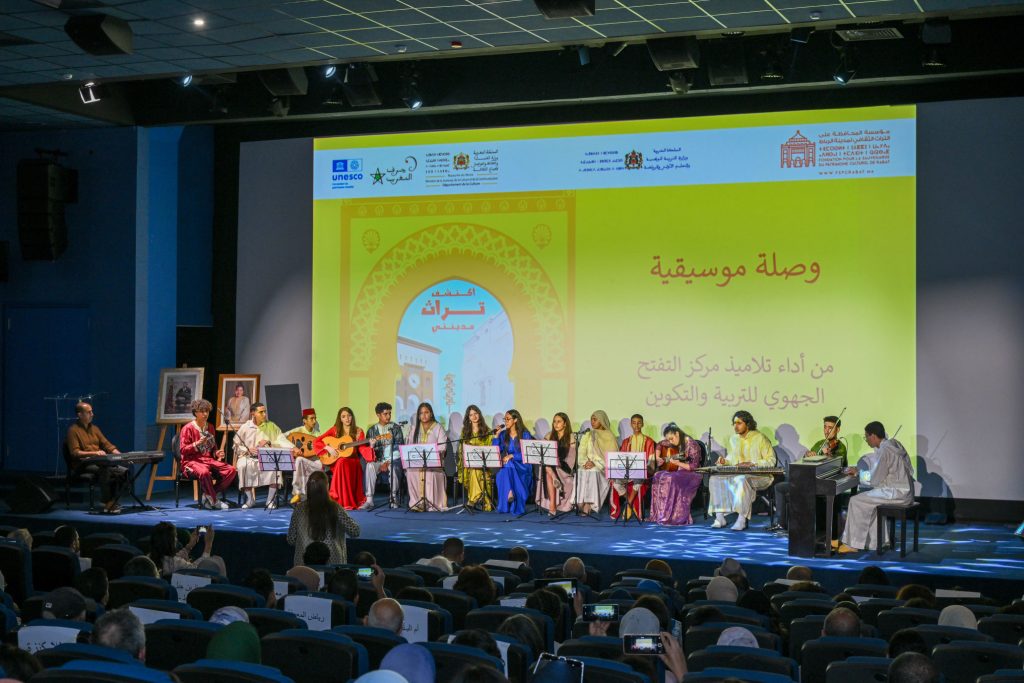
These ceremonies provided a privileged space for exchange and showcasing of artistic and educational initiatives, featuring theatrical and musical performances, audiovisual projections retracing the various stages of the programs, as well as presentations of podcasts produced by the young participants. An exhibition of artistic works also highlighted the creations of the schoolchildren, demonstrating their engagement throughout the year.

“I Discover My Heritage”: Promoting Contextual, Artistic, and Cultural Education
For the fourth consecutive year, this flagship program enabled more than 5,000 secondary school students from 51 schools in Rabat, Salé, and Témara, as well as 600 secondary school students from Meknes and Moulay Idriss Zerhoun, to gain an in-depth understanding of their local heritage. The program is implemented in partnership with the Ministry of National Education, Preschool and Sports, the Ministry of Youth, Culture and Communication, UNESCO, and in collaboration with the Maison d’Artisan, MAP, ISIC, ENA, INRA, and INBA.

Based on innovative pedagogical approaches, the program emphasized strengthening teachers’ capacities through updating the educational kit adapted to the cultural specificities of the different territories. The students were invited to participate in site visits and collective workshops organized by the Foundation and its partners, fostering discovery, critical reflection, and awareness of the universal values of heritage. This approach aims to firmly anchor knowledge and encourage the collective appropriation of cultural heritage within a sustainable development and enlightened citizenship perspective.

“I Draw My Heritage”: An Integrated Approach to Cultural and Artistic Education
The program brought together over 650 primary school students from 20 schools in Rabat and more than 450 students from 15 schools in Meknes around the valorization of cultural heritage in all its forms, notably through artistic representation of local cultural symbols.

Linked to the national “Pioneer Schools” project, “I Draw My Heritage” was extended this year to secondary schools in Rabat, Salé, and Témara for a pilot phase. In partnership with the Mohammed VI Foundation for Environmental Protection, it allowed over 200 secondary school students to explore the richness of Moroccan craftsmanship, particularly zellige, through a creative and eco-responsible approach integrating the use of recycled materials and promoting sustainable ecological awareness.

Roya Magazine: A Platform for Youth Expression
The 3rd issue of Roya illustrates the richness of productions by young participants in the “I Discover My Heritage” program. Through diverse content combining journalism, literature, and art, the magazine highlights their voices and perspectives.

A special feature dedicated to the traditional “Rbati” wedding underscores the importance of preserving and transmitting the living forms of intangible heritage and collective memory of Rabat’s medina. Additionally, a special edition on Meknes pays tribute to the local cultural identity through portraits of iconic figures and places, created by the students of Meknes.

These programs, carried out in partnership with the Ministry of National Education, Preschool and Sports, the Ministry of Youth, Culture and Communication, UNESCO, and other committed partners, are part of a strategic vision to create sustainable synergy between stakeholders in education and culture. They promote heritage education based on the active involvement of youth and the promotion of arts and cultural expressions.

4 July 2025

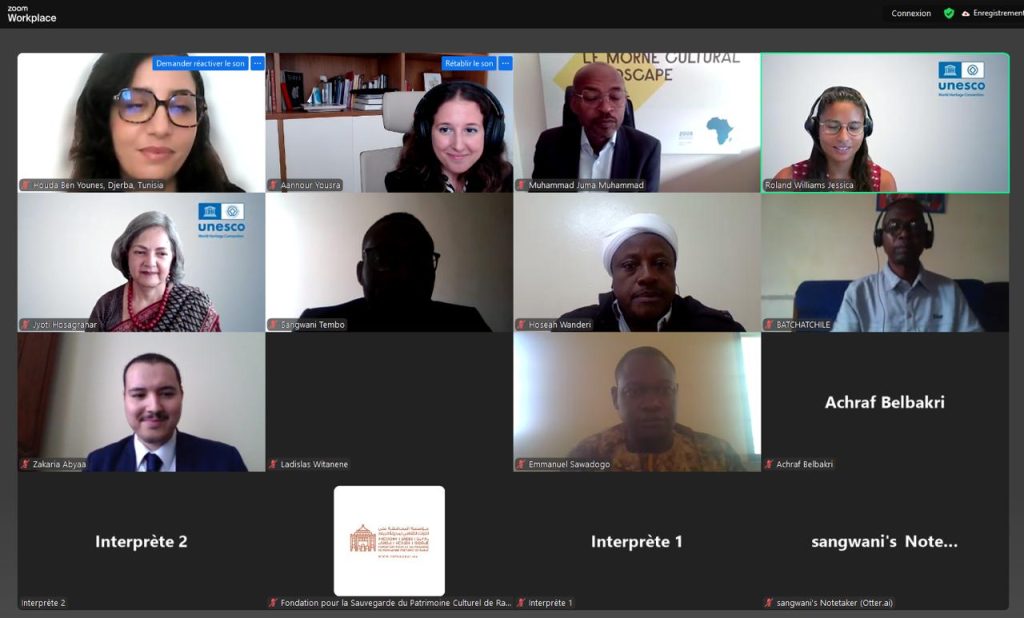
As part of the capacity-building series “African Heritage Sites Facing Climate Change,” the Fondation pour la Sauvegarde du Patrimoine Culturel de Rabat, in partnership with UNESCO, held Workshop 2 under the theme “African Heritage — A Legacy of Resilience and Harmony with the Environment.”

African heritage sites represent an invaluable cultural wealth, yet they are increasingly threatened by the impacts of climate change. The workshop highlighted how these sites, shaped by centuries of human ingenuity, demonstrate a remarkable capacity for adaptation through a combination of technical approaches, cultural knowledge and community-driven dynamics. Participants explored how vernacular architecture, cultural practices and collective resource management offer concrete and inspiring responses to the challenges posed by climate change.

The discussions underscored the relevance of traditional building systems—such as the use of local materials like earth, wood and stone, and the integration of passive ventilation and insulation—which continue to inform sustainable approaches to construction and environmental adaptation. Speakers also addressed the intricate relationship between ecosystems and heritage, showing how the protection of cultural sites contributes to safeguarding local environments, supporting livelihoods, managing water resources and, in many cases, ensuring food security.

The workshop further showcased innovative conservation experiences that combine ancestral knowledge with contemporary technologies to strengthen the resilience of heritage sites. These case studies illustrated how modern conservation can evolve while remaining deeply anchored in cultural continuity.

Throughout the presentations, particular attention was given to the role of intangible heritage. Rituals, oral traditions and intergenerational knowledge were highlighted as essential elements of environmental management and climate adaptation strategies, reflecting community cohesion and the transmission of ecological wisdom across generations.

Through this workshop, African heritage emerged not only as a testament to history and identity, but also as a living reservoir of solutions, capable of guiding climate-resilient strategies and contributing meaningfully to global reflections on sustainability.

3 July 2025

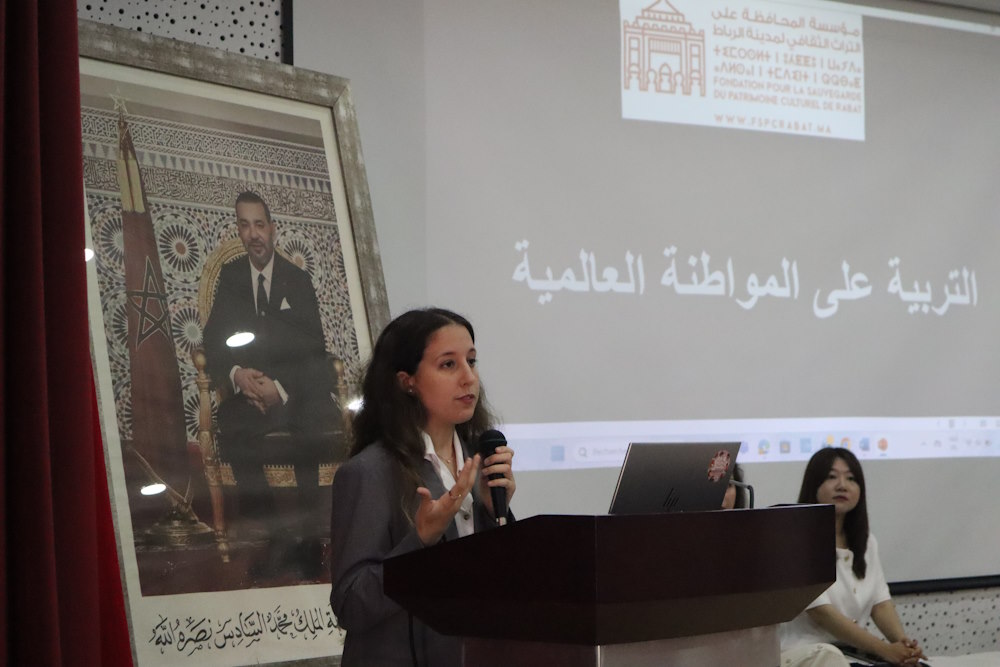
The Foundation for the Safeguarding of the Cultural Heritage of  City of Rabat, presided over by Her Royal Highness Princess Lalla Hasnaa, organized, in partnership with the Ministry of National Education, Preschool and Sports, and the Asia-Pacific Centre of Education for International Understanding (APCEIU), two hands-on educational workshops on May 27 and 28, 2025, focused on World Heritage education as an entry point to teaching the values of global citizenship.

This partnership aims to promote heritage education in schools by linking UNESCO-designated World Heritage cultural sites—such as the archaeological site of Volubilis, the old medina of Meknes, and the modern city of Rabat—with universal values such as diversity, dialogue, solidarity, and social justice.

Workshop to Strengthen Teachers’ Capacities

The first day was dedicated to a training workshop for teachers, featuring both theoretical and practical activities led by specialists in heritage, history, communication, education, and global citizenship… A participatory and experiential approach was adopted, progressing through integrated phases from theoretical presentations to group discussions, followed by educational or creative production.

This workshop contributed to evaluating how well the theme aligned with the expectations of educators. It also offered a space for sharing perspectives and practical proposals regarding the project. More than 40 teachers were invited to participate in the workshop, which was held at the Regional Center for Artistic and Literary Activities in Rabat.

Workshop to Strengthen Students’ Capacities

On the second day, middle school students were invited to take part in interactive practical workshops held at Bab Oudaia. These workshops focused on key activities. The first involved drafting a speech that expressed young people’s commitment to heritage and global citizenship issues. The second activity centered on designing awareness posters, during which groups of students created posters with meaningful slogans and messages directed at their peers, around values such as coexistence and cultural diversity. In the third activity, students performed short theatrical scenes portraying situations and scenarios that reflected their awareness of their roles as global citizens and explored their responsibilities toward heritage and sustainable development.

These activities helped to stimulate critical thinking, teamwork, and creativity among students, and enabled them to express their vision of the youth’s role in protecting heritage and building a shared future.

This initiative is part of the educational approach adopted by the Foundation for the Safeguarding of the Cultural Heritage of the City of Rabat, which aims to instill heritage education and global citizenship values among young people and teachers, through innovative pedagogical tools and meaningful field experiences.

28 May 2025

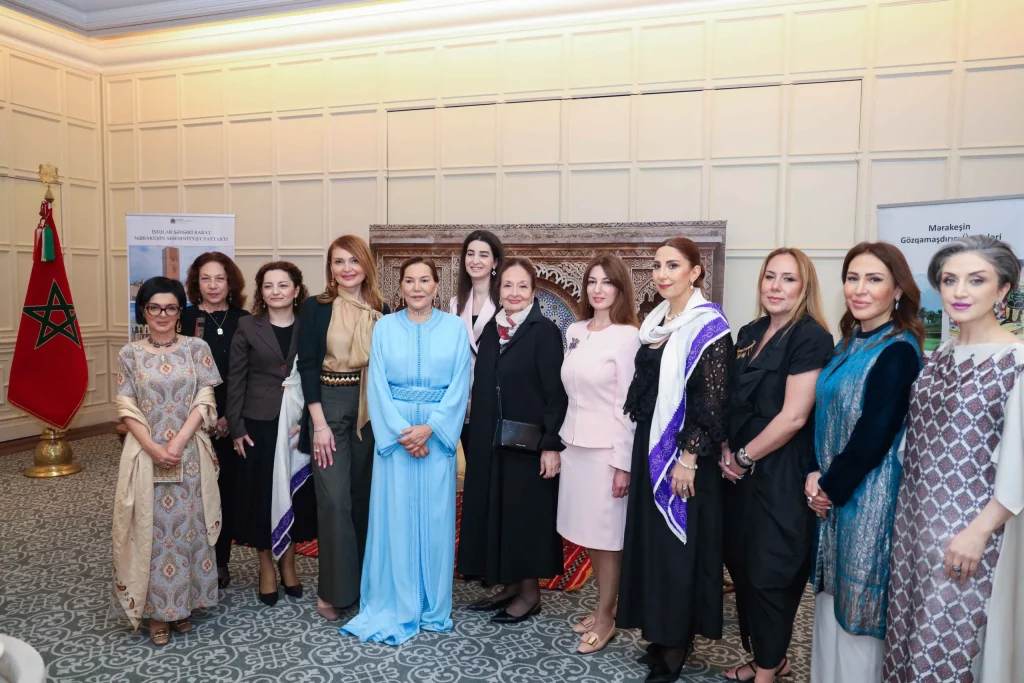
Baku – Her Royal Highness Princess Lalla Hasnaa, President of the Foundation for the Safeguarding of Cultural Heritage in Rabat, offered a tea ceremony in Baku on Thursday in honor of Azerbaijani women personalities from the realms of culture and the arts.

The ceremony was attended by Chafiga Mammadova a theater and film actress and an emblematic figure in the Azerbaijani artistic circle; Fidan Hadjieva, People’s Artist of Azerbaijan, opera singer, and mezzo-soprano; Amina Melikova, Director of the National Carpet Museum of Azerbaijan; and Shirin Melikova, Director of the National Museum of Fine Arts of Azerbaijan.

Also attending the ceremony were Nadezhda Ismayilova, a distinguished journalist of the Republic of Azerbaijan; Sabina Shikhlinskaya, a distinguished artist of Azerbaijan; Asmar Babayeva, artistic director of “Azerkhalcha”, an institution dedicated to the preservation and promotion of Azerbaijani carpet weaving; Firuza Sultan-zade, Director of the Republican Center for Child and Youth Development; Günel Rzayeva, Director of the Baku Book Center; Gulnara Khalilova, Stylist, Director of the National Costume Center of Azerbaijan; Rena Mammadova, Director of the Department for the Study and Promotion at the Heydar Aliyev Center, and Nargiz Guliyeva, a renowned painter.

Also present at the tea ceremony were Nouzha Alaoui, Secretary General of the Foundation for the Safeguarding of Cultural Heritage in Rabat, and Aïcha El Boukhari, spouse of the Ambassador of the Kingdom of Morocco to Baku.

8 May 2025

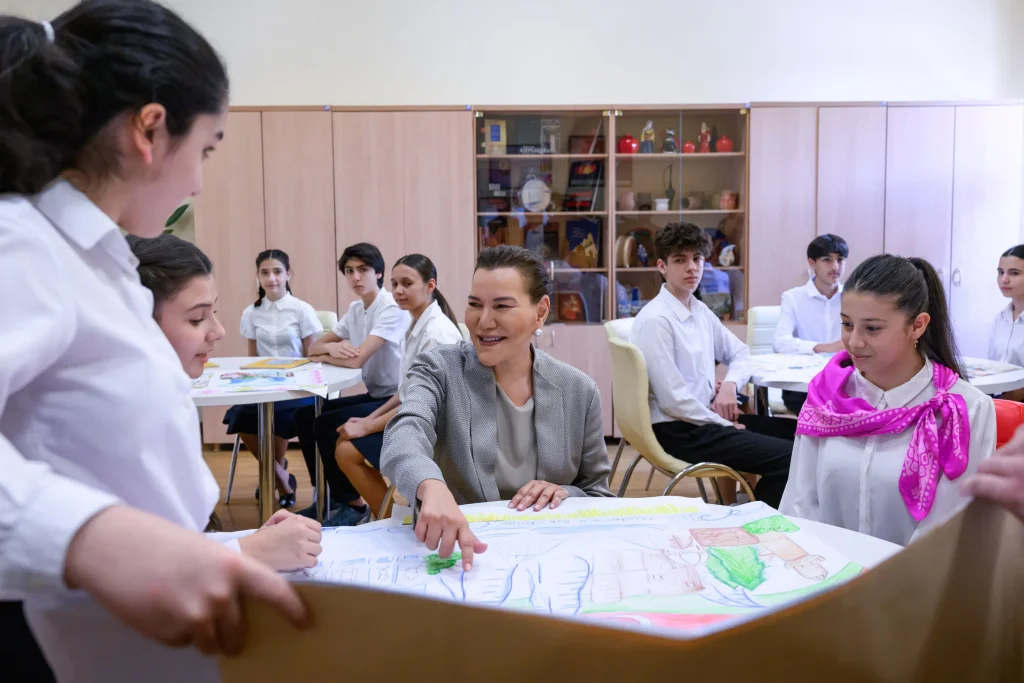
Baku – Her Royal Highness Princess Lalla Hasnaa, President of the Foundation for the Safeguarding of Cultural Heritage of Rabat, paid a visit to the secondary school “Educational Complex 132–134” in Baku on Wednesday, as part of the educational twinning project between schools in Rabat and the Azerbaijani capital.

Upon arrival, Her Royal Highness was greeted by Azerbaijan’s Minister of Science and Education Emin Amrullayev, Deputy Minister of Culture Murad Huseynov and Morocco’s Minister of Youth, Culture, and Communication Mohammed Mehdi Bensaid.

HRH Princess Lalla Hasnaa was also greeted by Mohamed Adil Embarch, Ambassador of His Majesty the King to Baku; Nouzha Alaoui, Secretary-General of the Foundation for the Safeguarding of Cultural Heritage of Rabat; Tarik Sadik, General Manager of la Maison de l’Artisan, the Foundation’s partner; Aygun Milkayilova, Director of Educational Complex 132–134; as well as two young ambassadors of the school, Maryam Aghayeva and Tamirlan Salimov.

In a speech on the occasion, Amrullayev expressed his honor at welcoming Her Royal Highness to this prestigious educational institution, which has produced renowned public figures, scientists, and prominent cultural personalities.

This event marks the beginning of a new chapter in the school’s history, under the sign of cultural exchange, shared values, and educational collaboration, he enthused, noting that the twinning program, implemented in partnership with the Foundation for the Safeguarding of Cultural Heritage of Rabat, reflects a shared commitment to global citizenship and mutual understanding through education.

He further stated that the twinning program would allow young people to discover, preserve, and celebrate cultural heritage as a key component of their identity and a bridge between the two cities.

For her part, Educational Complex 132–134 Director Aygun Milkayilova emphasized that this twinning project would make a significant contribution to turning cultural heritage into a shared value, while fostering intercultural dialogue. She underlined the importance of this collaboration in laying the groundwork for deeper mutual understanding and lasting cooperation among younger generations.

Her Royal Highness Princess Lalla Hasnaa then visited the school’s history Museum, where Her Royal Highness attended student performances, beginning with renditions of the national anthems of Azerbaijan and Morocco.

On this occasion, Her Royal Highness attended musical performances by the young Atila Garib, who sang the song “Azerbaijan”, and student Abid Chalabiyrv, who paid tribute to Rabat’s musical heritage by performing “Chams El Achiya” on the Kamancha, a traditional Azerbaijani musical instrument, before Her Royal Highness followed an Azerbaijani folk dance “Cengi”.

Explanations were also presented to HRH Princess Lalla Hasnaa concerning the history museum by two student ambassadors, Nurlana Hasanli and Alper Qarib.

Her Royal Highness then visited a 7th grade class where she followed a presentation on the Azerbaijani education system and the inclusion of arts and cultural education in the pedagogical system.

The presentation highlighted the linguistic and cultural bridges with Rabat, as exemplified by the word “müəllim” (teacher), as well as the richness of shared links and the importance of intercultural dialogue in education.

On the same occasion, HRH Princess Lalla Hasnaa visited a second classroom where she attended “I discover my heritage” workshops, an accommodation of the educational program of the Foundation for the Safeguarding of the Cultural Heritage of Rabat to the cultural context of the city of Baku.

Her Royal Highness then visited an exhibition by the school’s students on the most emblematic monuments of the cities of Rabat and Baku.

These works, combining artistic expression and heritage awareness, reflect the richness of intercultural dialogue and the attachment of young generations to their authentic cultural heritage.

At the end of the visit, HRH Princess Lalla Hasnaa posed for commemorative photos with Azerbaijani officials and secondary school students from Educational Complex 132-134.

7 May 2025

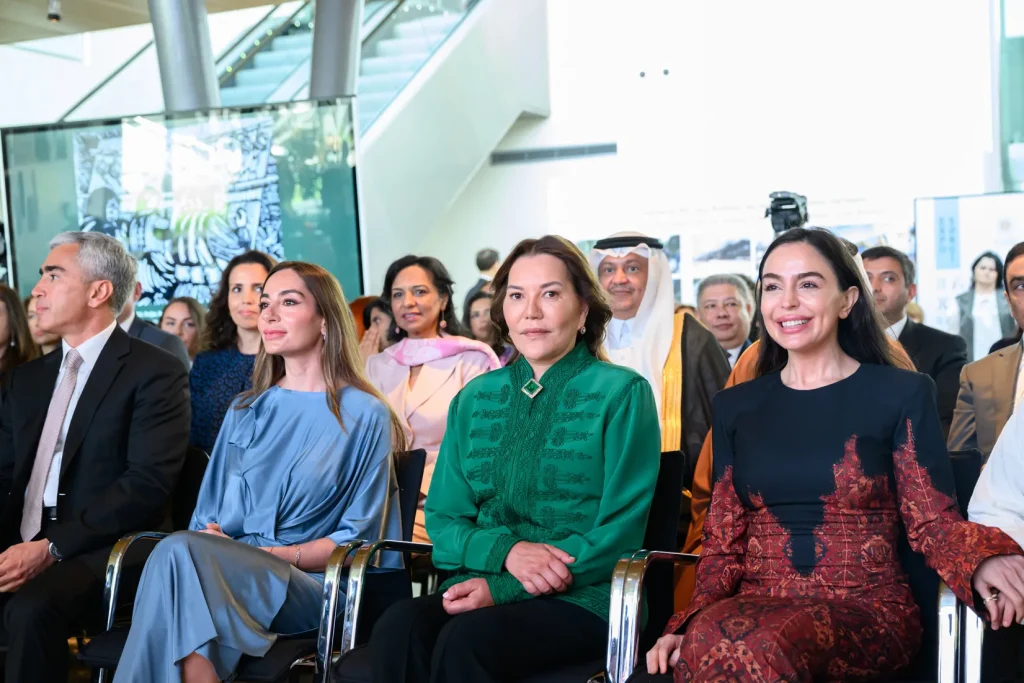
Baku – Her Royal Highness Princess Lalla Hasnaa, President of the Foundation for the Safeguarding of Cultural Heritage of Rabat, accompanied by Leyla Aliyeva, Vice-President of the Heydar Aliyev Foundation, and Arzu Aliyeva, Head of Baku Media Center, inaugurated on Tuesday the digital exhibition “The Art of Rabat Carpet” at the Azerbaijan National Carpet Museum, celebrating one of the Kingdom of Morocco’s most emblematic ancestral skills.

Created in partnership with the National Carpet Museum in Baku, “Handicrafts from Morocco” and Morocco’s National Foundation of Museums, this cultural event, designed using an innovative approach combining physical exhibits and immersive technologies, offers an interactive experience dedicated to upgrading and transferring artisanal know-how, while enshrining Rabat’s positioning as a cultural and creative capital.

It recounts the origins of the Rabat carpet, its meticulous crafting techniques and the central role played by women artisans in the transmission of this authentic art. Photographs, scientific texts and infographics enrich this exploration.

Upon her arrival at the Azerbaijan National Carpet Museum, Her Royal Highness Princess Lalla Hasnaa was welcomed by Leyla Aliyeva and Arzu Aliyeva.

Her Royal Highness was also greeted by Azerbaijani Minister of Culture Adil Karimli, Morocco’s Minister of Youth, Culture and Communication Mohammed Mehdi Bensaid, ambassador of His Majesty the King to Baku Mohamed Adil Embarch, Secretary-General of the Foundation for the Safeguarding of Cultural Heritage of Rabat Nouzha Alaoui, Director General of “Handicraft from Morocco” Tarik Sadik, as well as Museum Director Amina Melikova.

On this occasion, Melikova delivered a speech in which she said she was honored to receive HRH Princess Lalla Hasnaa at the National Carpet Museum during the inauguration of this exceptional exhibition, honoring carpet artistery’s highly symbolic significance and its shared cultural scope between Morocco and Azerbaijan.

Melikova also underlined the importance of this great initiative enabling the discovery of numerous shared convergent areas of both countries’ carpet traditions.

The ceremony featured the display of an animated movie titled “The Magic Tale of Pari Khanum”, which showcases the carpet’s prominent positioning in Azerbaijan’s culture. It also saw the performance of a musical sequence named “Weaving with Love” by  Mugham singer Zabita Aliyeva, with lyrics written by Azerbaijani People’s artist and master carpet designer Eldar Mikayizade, and music composed by Azerbaijani People’s artist Faig Sujaddinov.

HRH Princess Lalla Hasnaa, accompanied by Leyla Aliyeva and Arzu Aliyeva, was also briefed on the work of the Foundation for the Safeguarding of Cultural Heritage of Rabat, and the city’s role as a crossroads of cultures.

Her Royal Highness also followed explanations detailing Rabat carpet’s history, its origins and evolution over centuries, as well as various crafting phases, from the choice of materials to the finished piece (wool preparation: selection, washing, carding and spinning, natural dyeing: traditional techniques and pigments).

HRH Princess Lalla Hasnaa then visited an exhibition dedicated to Azerbaijani carpet weavers, which focuses on the history of the Azerbaijani carpet, its weaving tools, the role of women in safeguarding this ancestral know-how, and its evolution over time.

On the same occasion, Her Royal Highness followed presentations on the painting “Carpet Weavers” by Khalida Safarova, a People’s artist of Azerbaijan; the ‘Muse’ doll by artist Elmira Abbasli, a distinguished cultural worker, and a short animated film dedicated to the “Muse” doll.

Subsequently, Her Royal Highness Princess Lalla Hasnaa, accompanied by Leyla Aliyeva and Arzu Aliyeva, followed explanations on five new carpets developed as part of the project “Revival of the art of Azerbaijani carpet weaving: originality and innovation”, before proceeding to cutting, according to Azerbaijani tradition, the new woven carpet “Naqshi Jahan”, crafted at the Traditional Technologies Department of the Azerbaijan National Carpet Museum, a step symbolizing the birth of a new carpet.

HRH Princess Lalla Hasnaa then visited the permanent exhibition of the Azerbaijan National Carpet Museum, before signing the Golden Book of this prestigious museum institution.

Driven by the enlightened vision of Her Royal Highness Princess Lalla Hasnaa, the digital exhibition “The Art of Rabat Carpet” also expresses a strong ambition: to rethink ways of transferring intangible heritage through technological innovation, cultural mediation and sustainable development dynamics.
6 May 2025